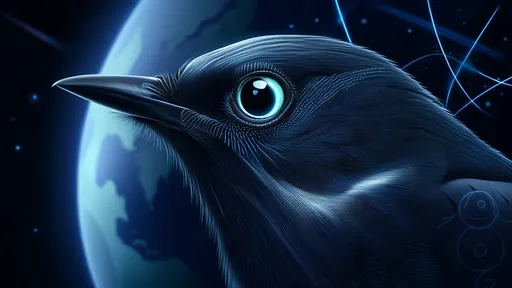
For decades, the remarkable ability of migratory birds to navigate across vast distances has fascinated scientists. Among these avian navigators, the European robin (Erithacus rubecula) stands out as a particularly intriguing subject. Recent research has unveiled a startling discovery: these birds may rely on a "quantum compass" rooted in the quantum mechanical properties of a specialized protein in their eyes. This revelation not only deepens our understanding of avian navigation but also blurs the line between biology and quantum physics.
The concept of a biological quantum compass hinges on a protein called cryptochrome, found in the retinas of birds. Cryptochrome is sensitive to blue light and is thought to play a pivotal role in detecting Earth's magnetic field. Unlike traditional compasses that rely on magnetic needles, the robin's navigation system appears to exploit quantum coherence—a phenomenon where particles exist in multiple states simultaneously. This quantum effect, once thought to be too fragile for biological systems, may persist long enough in cryptochrome to influence the bird's behavior.
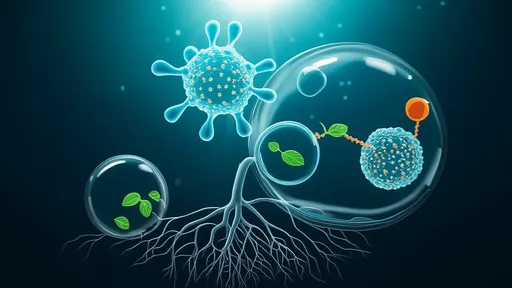
How does this quantum mechanism work? When blue light strikes cryptochrome, it triggers a transfer of electrons between molecules, creating radical pairs—molecules with unpaired electrons. These radical pairs exist in a quantum superposition, meaning their spins (a quantum property related to magnetism) are entangled. Earth's magnetic field subtly alters the spins of these electrons, affecting the chemical reactions that follow. The robin's brain interprets these changes as directional cues, effectively allowing the bird to "see" magnetic fields.
What makes this discovery extraordinary is the environment in which these quantum effects occur. Biological systems are warm, wet, and noisy—conditions traditionally considered hostile to quantum coherence. Yet, cryptochrome maintains these delicate quantum states long enough to be biologically relevant. Researchers speculate that the protein's structure may shield the radical pairs from disruptive forces, acting as a natural quantum simulator. This challenges the long-held assumption that quantum effects are confined to ultra-cold or highly controlled laboratory settings.
The implications extend far beyond avian navigation. If quantum biology proves to be a widespread phenomenon, it could revolutionize fields from medicine to computing. For instance, understanding how cryptochrome maintains quantum coherence could inspire new materials for quantum technologies. Meanwhile, the study of magnetoreception in birds might shed light on similar mechanisms in other species, including humans. Some studies suggest that cryptochrome in the human eye could influence circadian rhythms, though its role in magnetoreception remains speculative.
Despite these breakthroughs, many questions linger. How exactly does the robin's brain translate quantum signals into navigational decisions? Are other migratory species using similar mechanisms? And could environmental factors like electromagnetic interference from human technology disrupt these delicate systems? Researchers are now designing experiments to probe these mysteries, combining techniques from quantum physics, biochemistry, and behavioral ecology.
One thing is clear: the humble robin has become an unlikely ambassador for quantum biology. Its ability to harness quantum mechanics for survival underscores the profound interconnectedness of life and the fundamental laws of physics. As scientists continue to unravel the secrets of the quantum compass, they may find that nature has been exploiting quantum phenomena for millions of years—long before humans even conceived of them.
By /Aug 18, 2025
By /Aug 18, 2025

By /Aug 18, 2025

By /Aug 18, 2025

By /Aug 18, 2025
By /Aug 18, 2025
By /Aug 18, 2025
By /Aug 18, 2025

By /Aug 18, 2025
By /Aug 18, 2025
By /Aug 18, 2025

By /Aug 18, 2025
By /Aug 18, 2025

By /Aug 18, 2025

By /Aug 18, 2025
By /Aug 18, 2025
By /Aug 18, 2025
By /Aug 18, 2025
By /Aug 18, 2025
By /Aug 18, 2025
