The scientific community has long sought innovative ways to optimize the production of artemisinin, a potent antimalarial compound derived from the sweet wormwood plant. With the advent of synthetic biology and artificial intelligence, researchers are now pioneering a groundbreaking approach: using AI to intelligently regulate metabolic fluxes in yeast for enhanced artemisinin production. This convergence of biotechnology and machine learning promises to revolutionize how we manufacture complex plant-derived medicines.
The Artemisinin Challenge
Traditional methods of artemisinin extraction from Artemisia annua plants face significant limitations. Seasonal variability, low yields, and labor-intensive cultivation processes create supply chain vulnerabilities. These challenges became particularly acute during global malaria outbreaks when demand surged unpredictably. The scientific response has focused on developing microbial cell factories - primarily using engineered yeast strains - to produce artemisinic acid, the immediate precursor to artemisinin.
While metabolic engineering of Saccharomyces cerevisiae has achieved notable success, the complexity of cellular metabolism presents persistent bottlenecks. The yeast's native biochemical networks often divert resources away from the desired artemisinin pathway, creating inefficiencies that limit production capacity. This is where artificial intelligence steps in as a game-changing solution.
AI-Driven Metabolic Optimization
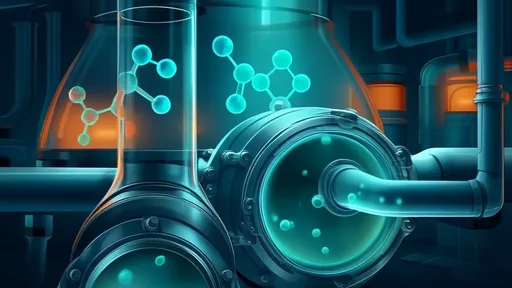
Modern AI systems are uniquely equipped to navigate the intricate landscape of cellular metabolism. By processing vast datasets encompassing genomic, proteomic, and metabolomic information, machine learning algorithms can identify optimal metabolic flux distributions that human researchers might overlook. The "AI factory" concept involves continuous monitoring and dynamic adjustment of yeast metabolism through automated bioreactor systems.
Sophisticated neural networks analyze real-time sensor data from fermentation tanks, tracking hundreds of variables simultaneously. These include nutrient concentrations, dissolved oxygen levels, pH, temperature, and the expression of key enzymes in the artemisinin biosynthetic pathway. The AI system then makes precise adjustments to cultivation conditions, steering metabolic fluxes toward maximum artemisinic acid output.
Beyond Static Engineering
Traditional metabolic engineering approaches rely on static genetic modifications - knocking out competing pathways or overexpressing key enzymes. While effective to a degree, these modifications lack the flexibility to respond to changing cellular conditions during fermentation. The AI factory paradigm introduces unprecedented dynamic control.
Researchers have developed optogenetic systems where light-sensitive promoters regulate gene expression in real-time. The AI controller adjusts light wavelengths and intensities to fine-tune the activity of critical enzymes like amorphadiene synthase and cytochrome P450. This level of temporal precision maintains optimal flux through the mevalonate pathway while minimizing metabolic burden on the host cells.
Data Integration and Predictive Modeling
The power of AI-driven artemisinin production lies in its ability to synthesize information across multiple scales. Machine learning models incorporate data from transcriptomics, flux balance analysis, and proteomics to build comprehensive representations of yeast metabolism. These models can predict how subtle changes in culture conditions will propagate through metabolic networks.
Perhaps most impressively, the systems employ reinforcement learning - the AI equivalent of trial-and-error experimentation. The algorithm tests various control strategies in silico before implementing them in physical bioreactors, dramatically accelerating the optimization process. This approach has reduced development cycles from months to weeks compared to conventional methods.
Scaling Up with Intelligence
Transitioning from laboratory-scale to industrial production presents formidable challenges that AI is particularly well-suited to address. Metabolic behaviors that work perfectly in small flasks often fail to translate to large fermentation tanks due to gradients in nutrients, gases, and shear forces. AI systems can detect these scale-up issues early and recommend compensatory adjustments.
At production scale, the AI factory maintains robust performance despite biological variability between yeast batches. By continuously learning from each fermentation run, the system becomes increasingly adept at handling unexpected disturbances - whether from raw material fluctuations or equipment variations. This adaptive capability ensures consistent artemisinin yields critical for reliable drug supply.
Economic and Global Health Impacts
The implications of AI-optimized artemisinin production extend far beyond technical achievements. By significantly reducing manufacturing costs, this technology could make antimalarial treatments more accessible in developing regions where the disease burden is highest. Current estimates suggest AI-driven processes may lower production expenses by 40-60% compared to traditional methods.
Moreover, the flexible nature of microbial fermentation allows for rapid production scaling in response to malaria outbreaks. Public health organizations could leverage this responsiveness to prevent medication shortages during seasonal demand spikes or emerging drug resistance scenarios. The technology also establishes a blueprint for producing other high-value plant-derived pharmaceuticals.
Future Directions and Challenges
While promising, AI-controlled biomanufacturing still faces hurdles before widespread adoption. Regulatory frameworks must evolve to assess these novel production methods, particularly regarding the acceptability of AI-driven process changes without human intervention. There are also intellectual property considerations around AI-generated process optimizations.
Researchers are now working to expand these techniques to other valuable compounds, creating a generalized platform for AI-driven microbial synthesis. The lessons learned from artemisinin production are informing approaches to manufacture everything from anticancer drugs to rare flavor compounds. As the technology matures, we may see entire "smart" pharmaceutical factories where AI systems oversee multiple parallel fermentation processes.
The marriage of artificial intelligence and synthetic biology in the artemisinin AI factory represents more than an industrial advancement - it signals a fundamental shift in how humanity harnesses biological systems. By treating cellular metabolism as an optimizable information processing system, we open new frontiers in sustainable medicine production. This innovation stands to make essential treatments more affordable and accessible worldwide while demonstrating the transformative potential of interdisciplinary research.

By /Aug 18, 2025
By /Aug 18, 2025

By /Aug 18, 2025

By /Aug 18, 2025
By /Aug 18, 2025

By /Aug 18, 2025
By /Aug 18, 2025
By /Aug 18, 2025

By /Aug 18, 2025
By /Aug 18, 2025

By /Aug 18, 2025

By /Aug 18, 2025
By /Aug 18, 2025

By /Aug 18, 2025

By /Aug 18, 2025
By /Aug 18, 2025

By /Aug 18, 2025
By /Aug 18, 2025
By /Aug 18, 2025
By /Aug 18, 2025
