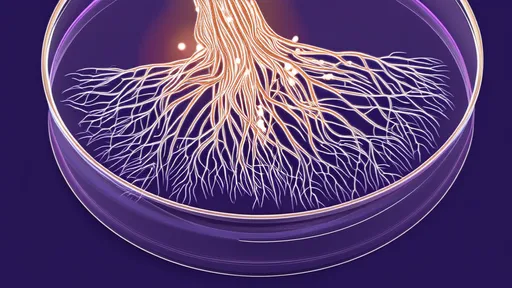
Scientists have long been fascinated by how plants perceive and respond to gravity, a phenomenon known as gravitropism. Recent breakthroughs in understanding the molecular mechanisms behind this process have centered on Arabidopsis thaliana, a model organism in plant biology. Researchers have now decoded the calcium signaling pathways that act as a "gravity compass" in roots, shedding light on how plants orient their growth downward into the soil.
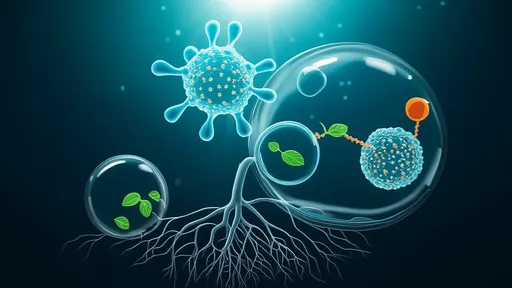
The study, published in a leading plant science journal, reveals that root cells in Arabidopsis utilize calcium ions as secondary messengers to transmit gravitational signals. When roots are reoriented, specialized cells called statocytes detect the change in gravity direction through starch-filled organelles known as statoliths. These statoliths sediment to the new bottom of the cell, triggering a cascade of calcium signals that ultimately guide the root's downward growth.
What makes this discovery particularly exciting is the identification of specific calcium channels and sensors involved in the process. The research team employed advanced imaging techniques to visualize calcium fluctuations in real-time, demonstrating how these signals propagate from the root tip upward. This calcium "wave" appears to coordinate the differential cell elongation that causes roots to bend in the direction of gravity.
The gravity response in plants has crucial implications for agriculture and space biology. Understanding how plants sense and adapt to their orientation could lead to crops with more robust root systems or better growth in challenging environments. Moreover, as humans contemplate long-term space missions, deciphering plant gravity responses becomes essential for developing effective space-based agriculture systems.
Interestingly, the calcium signaling mechanism shows remarkable similarity to processes found in animal systems, suggesting evolutionary conservation of fundamental sensory mechanisms across kingdoms. The researchers noted that while the statolith-based gravity sensing appears unique to plants, the downstream calcium signaling pathways share common elements with those involved in animal cell signaling.
Field experts have praised the study for its innovative approach to combining genetic, cellular, and biophysical techniques. By using Arabidopsis mutants with altered calcium signaling components, the team was able to pinpoint which molecules are essential for proper gravitropism. Some mutants showed completely disrupted root growth patterns, confirming the critical role of calcium in this process.
The findings also raise new questions about how plants integrate multiple environmental signals. Roots must constantly balance responses to gravity, moisture, nutrients, and physical obstacles in the soil. The calcium signaling system appears to serve as a central hub for processing these various inputs, though the exact mechanisms of signal integration remain to be fully understood.
Practical applications of this research could emerge sooner than expected. Several agricultural biotechnology companies have already expressed interest in leveraging these findings to develop crops with improved root architectures. Enhanced root systems could lead to plants better able to withstand drought conditions or more efficient at nutrient uptake, potentially reducing fertilizer requirements.
Beyond agriculture, the discovery contributes to fundamental knowledge about how organisms perceive and respond to their physical environment. The plant "gravity compass" represents an elegant solution to a universal biological challenge - orientation and directional growth in a changing world. As research continues, scientists anticipate uncovering additional layers of complexity in how plants process and respond to gravitational cues.
The study's lead investigator emphasized that this work represents just the beginning of understanding plant gravity sensing. Future research will explore how calcium signals interact with other known gravitropism pathways, particularly those involving the plant hormone auxin. The relationship between calcium signaling and auxin transport promises to be a rich area for further investigation.
As climate change alters growing conditions worldwide and space exploration advances, insights into basic plant processes like gravitropism become increasingly valuable. This research on Arabidopsis roots may eventually help address some of the most pressing challenges in food security and extraterrestrial habitation, proving that even the smallest model organisms can yield discoveries with far-reaching implications.

By /Aug 18, 2025
By /Aug 18, 2025

By /Aug 18, 2025

By /Aug 18, 2025
By /Aug 18, 2025

By /Aug 18, 2025
By /Aug 18, 2025
By /Aug 18, 2025

By /Aug 18, 2025
By /Aug 18, 2025
By /Aug 18, 2025
By /Aug 18, 2025
By /Aug 18, 2025

By /Aug 18, 2025

By /Aug 18, 2025
By /Aug 18, 2025

By /Aug 18, 2025
By /Aug 18, 2025

By /Aug 18, 2025
By /Aug 18, 2025
